Clinical Gait Analysis for Children
3D Gait Analysis (3DGA) is an advanced, objective assessment used to understand walking patterns in children with orthopaedic, neurological or muscular conditions. The system captures detailed information on joint movements and the forces acting on joints during walking. This comprehensive evaluation helps identify the underlying biomechanical causes of gait abnormalities, enabling clinicians to make precise decisions regarding treatment, rehabilitation, orthotic management, or surgical planning.
Who It's For

Children
with Neuromuscular conditions such as cerebral palsy, brain injury, hereditary spastic paraparesis, spina bifida, peripheral neuropathies etc that affect walking in children.
Children
with children presenting with toe-walking.

Adolescents
with flat feet
Children
with muscular dystrophies
Other
with Orthopaedic conditions which affect walking in children
How It Works
-
Referral
Referral from a clinician or a therapist for Clinical gait analysis.
-
Clinical Evaluation
Assessment of joint range, strength, spasticity and control.
-
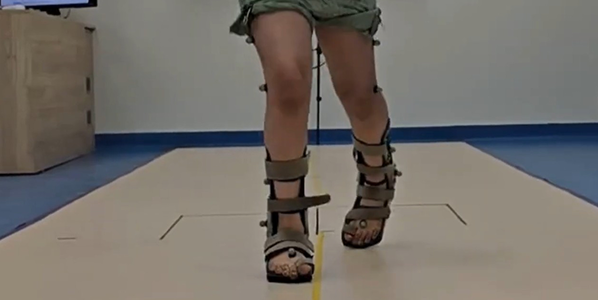
3D Motion Capture
Reflective markers placed on legs during walking trials.
-
Advanced Analysis
Complete lower limb kinematic and kinetic analysis.
-
Reports
Receive interpretations and personalized recommendations from experts to plan further treatment.
Benefits
- Improved clinical decision-making
Helps clinicians identify the exact biomechanical causes of gait abnormalities, supporting better planning for physiotherapy, orthotic prescription or surgical interventions.
- Assess effectiveness of orthosis
Comparisons of gait with and without orthosis allows to check for its effectiveness.
- Monitoring outcomes over time or after interventions
Allows objective tracking of progress and evaluation of the effectiveness of treatments such as therapy, orthoses or surgery. We make assessments before and after surgery or injections to assess outcomes objectively.